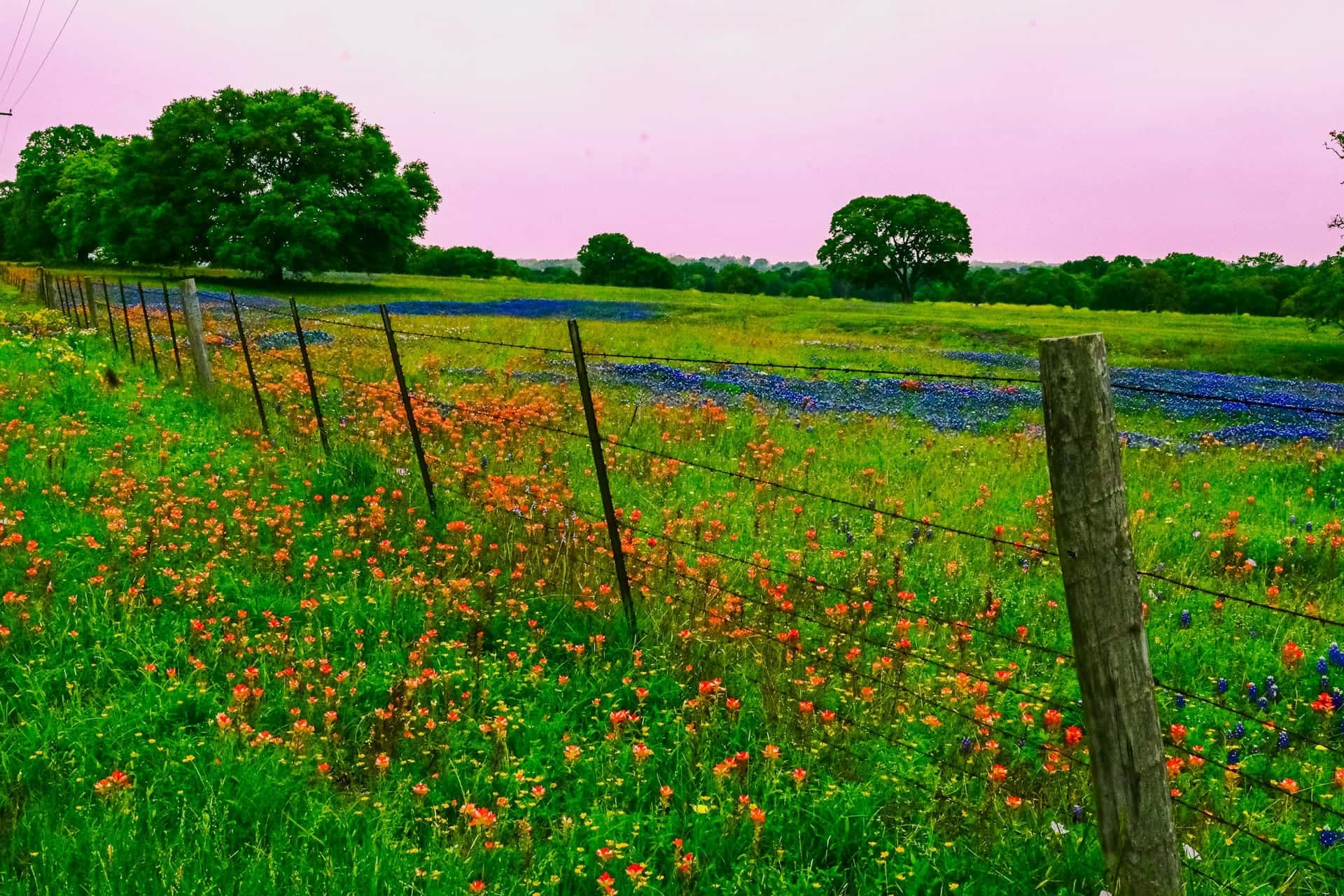
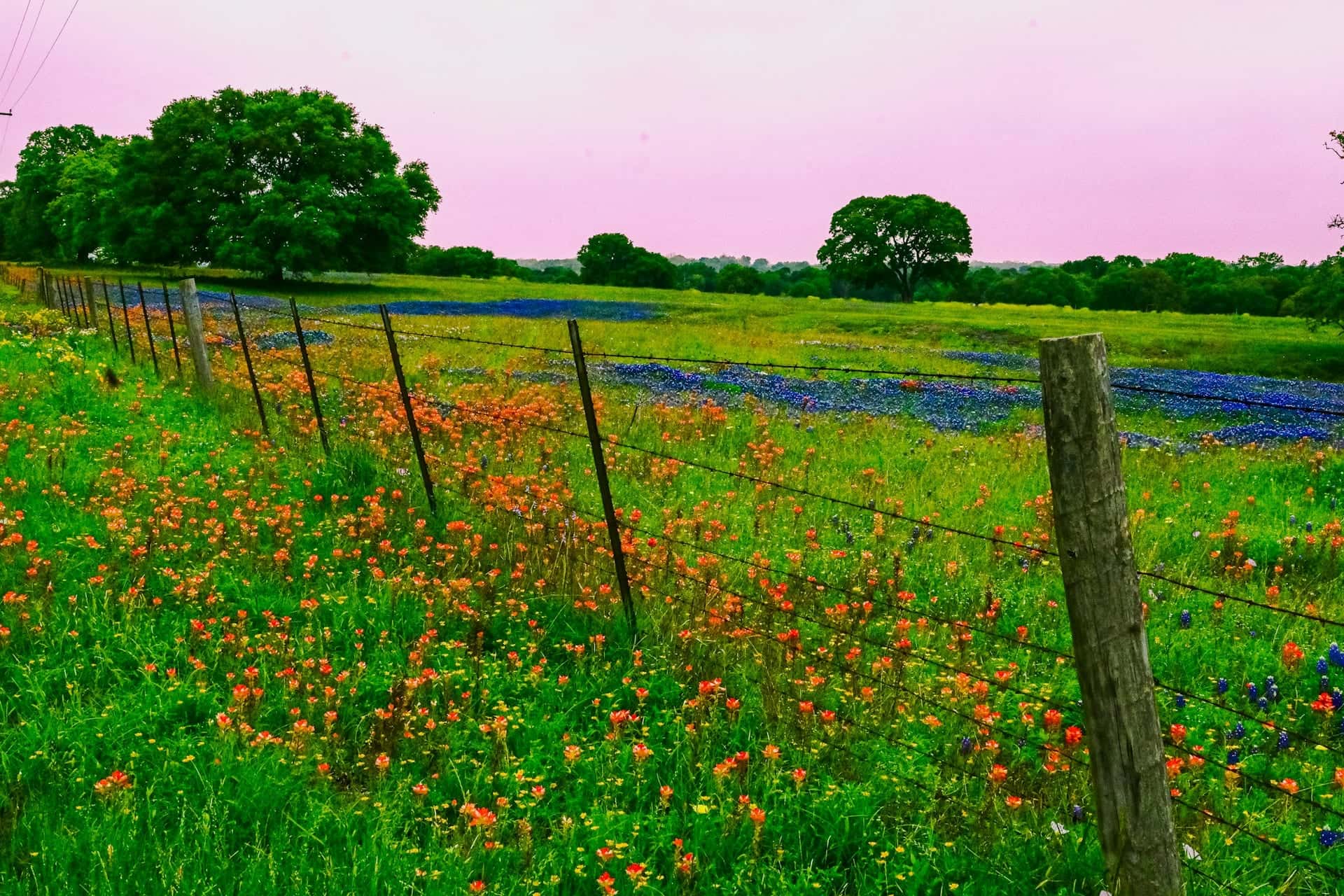
Every August we get calls from homeowners whose new plants are dying. Almost always, the plants were sold in April by a big-box garden center, looked great through May, and never had a chance. The fix is simple: plant things that evolved here. Texas natives and a few proven adapted plants handle weeks over 100 degrees, rocky alkaline soil and deer, and once established they need water every week or two instead of every day.
Here are twelve we rely on in nearly every Pecan Hollow planting plan, grouped by where they work.
Full sun, rocky soil
These plants like the conditions most yards west of I-35 actually have: thin soil over caliche, full afternoon sun, and little water.
Cenizo (Texas sage). A 5-to-6-foot silver-leaved shrub that bursts into purple bloom after summer rains. Deer rarely touch it. Don't shear it into a ball; it looks best left loose.
Autumn sage. A 2-to-3-foot shrubby salvia in red, pink, coral or white, blooming spring through frost. Hummingbirds love it. Cut it back by a third in February.
Zexmenia. A low, spreading mound of small orange-yellow daisies that blooms all summer on almost no water. Good at bed edges and on slopes.
Damianita. A tight, fragrant evergreen mound, 1 foot tall, covered in yellow flowers in spring and fall. It wants excellent drainage and hates being overwatered.
Grasses
Native grasses give structure, move in the wind and look good twelve months a year with one haircut.
Lindheimer muhly. Our most-used grass. A 4-to-5-foot fountain of blue-gray leaves with silvery plumes in fall. Deer leave it alone. Plant it in masses.
Gulf muhly. Smaller, at about 3 feet, with clouds of pink seed heads in October that stop people on the sidewalk. Best in full sun with good drainage.
Little bluestem. A 2-to-3-foot upright grass that turns copper and orange in fall. It's also one of the grasses we seed on slopes for erosion control, as we did on the terraced hillside at Canyon Lake.
Shade
Shade under live oaks and pecans is where most lawns fail. These plants take it.
Turk's cap. A 3-to-5-foot shrub with small red flowers shaped like turbans, blooming from summer to frost in sun or shade. Hummingbirds and butterflies visit constantly. It's the backbone of most of our shade gardens.
Inland sea oats. A native grass with flat, dangling seed heads that rustle in the breeze. It spreads in shade and is a good replacement for failed St. Augustine under trees.
Cedar sage. A small red-flowered salvia that grows in dry shade under oaks and cedars. It's what we use on the edges of shade beds, as on our live oak shade garden in Fair Oaks Ranch.
Small trees and structure
Texas mountain laurel. An evergreen small tree, 10 to 15 feet, with grape-scented purple flowers in March. It grows slowly, takes rock and drought, and deer mostly leave it alone. Note that the seeds are toxic.
Mexican plum. A 15-to-20-foot native with white spring flowers and small fruit for birds. It takes part shade under bigger trees.
How to get them through the first summer
Native plants still need help to establish. Their roots are only as deep as the nursery pot until they grow out into your soil, and that takes a season.
- Plant in fall if you can. Late September through November gives roots the whole cool season to grow before July.
- Use drip, not spray. Drip puts water at the roots and keeps leaves dry. Spray heads built for lawns soak the surface and run off.
- Water deeply, then less often. For the first summer, two or three long drip cycles a week. After the first year, most of these plants need water every week or two in summer and almost none in winter.
- Mulch 3 inches deep. It keeps roots cooler and soil moist. Keep it a hand's width from stems.
- Don't fertilize. Native plants grow best in lean soil. Fertilizer pushes soft growth that the heat burns.
Deer: a note of honesty
No plant is deer-proof. In a drought year, hungry deer will try almost anything. The plants above are the ones deer in Boerne, Helotes and Fair Oaks Ranch tend to skip. Young trees need cages for the first two falls, when bucks rub their antlers on trunks regardless of species.
Want a plan built around these?
Our native planting design service puts the right plants in the right spots for your soil, sun and deer. Every plan is at least 70% native or adapted, and every planting we install carries a 3-year plant warranty.