
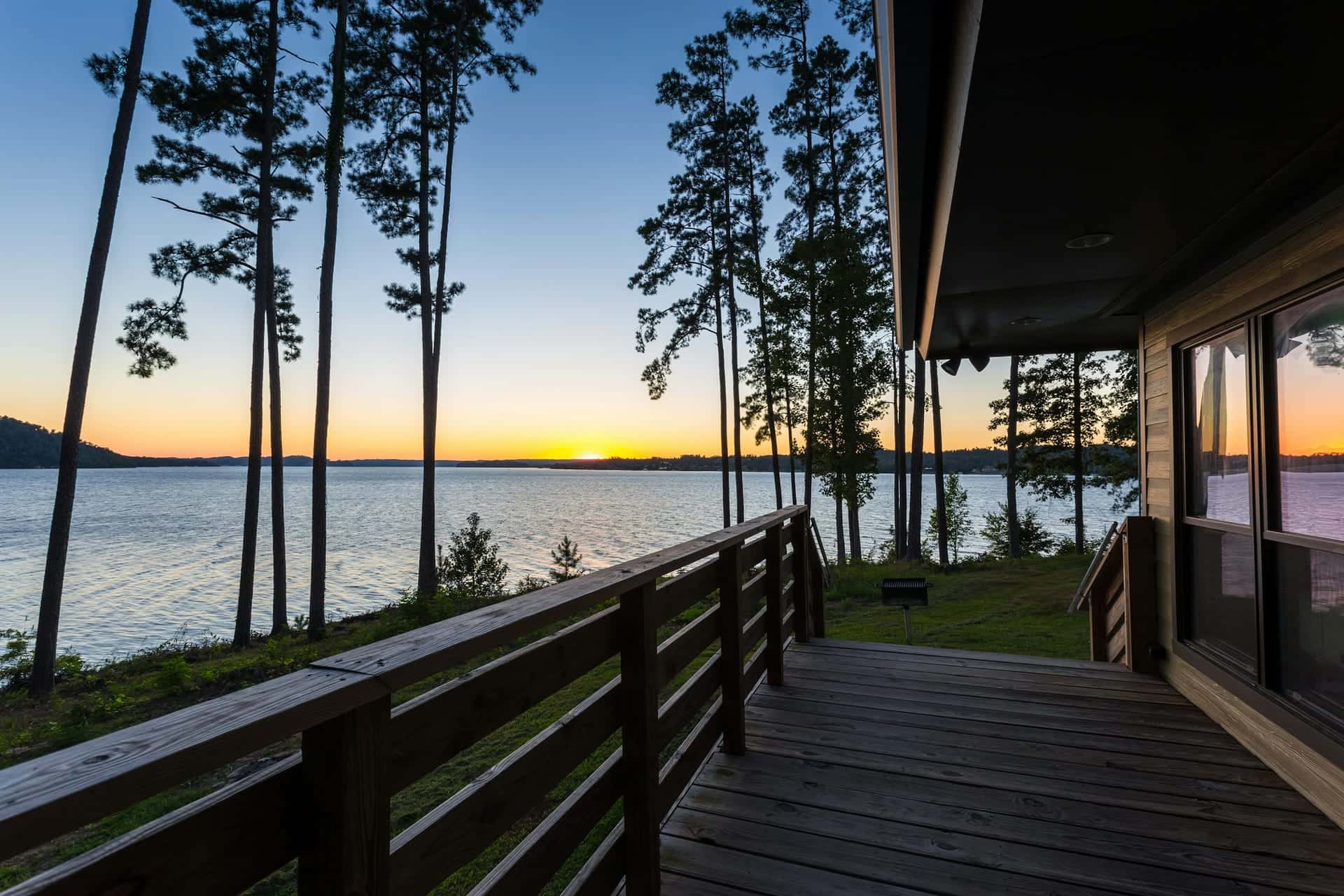
$70,000–$100,000 · 8 weeks
Terraced lake hillside, Canyon Lake
North shore, Canyon Lake · finished 2023 · led by Danny Ochoa
Site walks are free, 45 minutes, on your property.
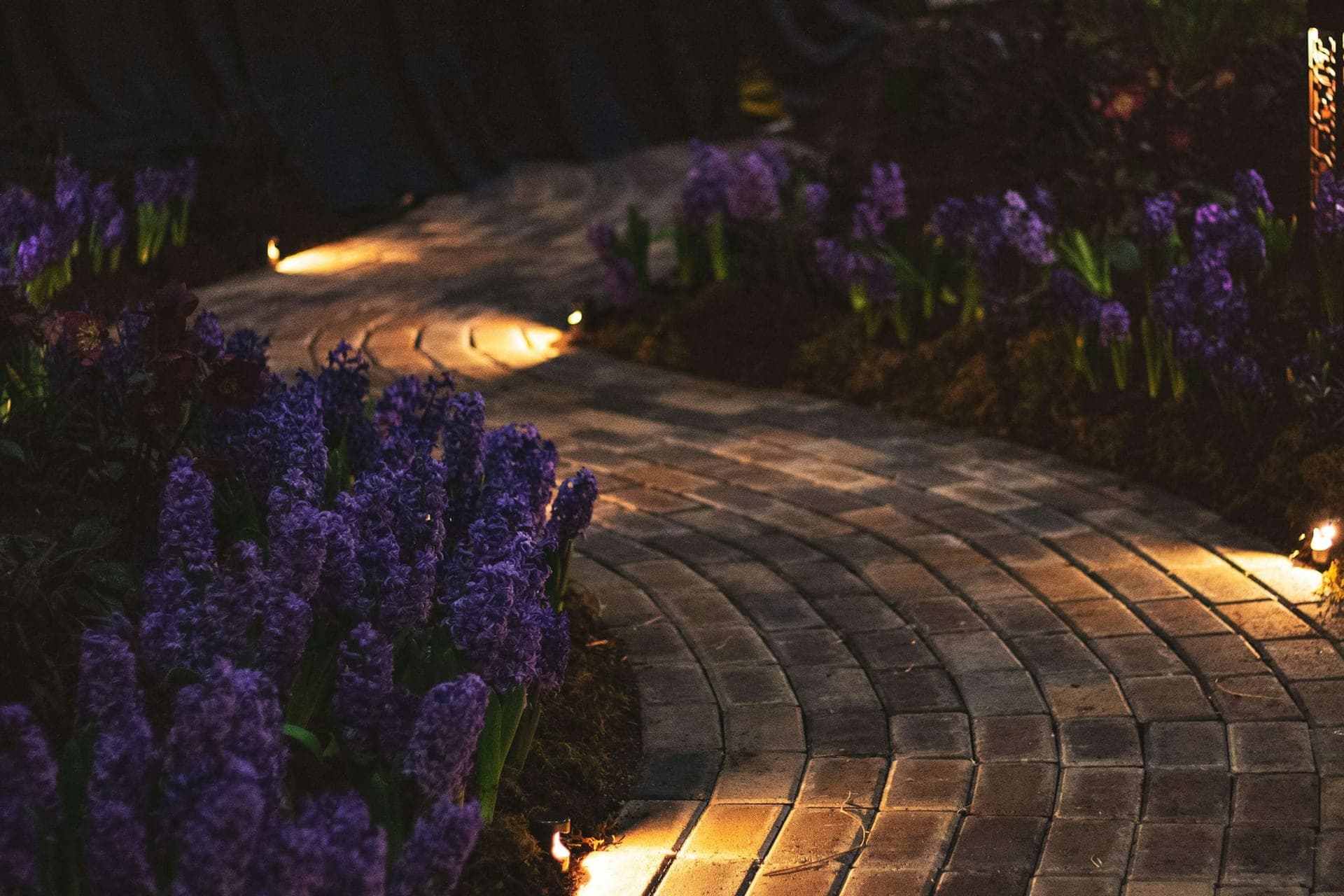
Landscape Lighting · from $300–$450 per fixture
Path and step lighting is safety lighting first. Every step, edge and change in level should be visible at night, especially on hillside lots where a walk to the dock or the pool drops 20 feet. Done right, it's also some of the most attractive lighting in a yard: soft pools of light that lead you through the garden.
We use shielded path lights that throw light down and out, not into your eyes, and step lights recessed into risers or wall caps. Spacing is set by the fixture's spread so pools of light overlap slightly, without the runway look of evenly spaced lights in a straight line.
Who it's for
Homes with steps, slopes or long walks used after dark. Lake houses with paths down to the water. Families with older relatives or young kids. Anyone who's ever missed a step on the way to the car.
Materials and options
| Fixture | Mount | Light pattern | Installed cost |
|---|---|---|---|
| Hooded path light, 18–24 in | Stake in bed | Wide, downward pool | $300–$450 |
| Low bollard | Stake or base | 360° low wash | $380–$520 |
| Recessed step light | In riser or wall | Across tread | $280–$420 |
| Hardscape strip light | Under wall cap or step nose | Linear wash | $320–$480 per section |
What it costs
$300–$450 per fixture
installed, plus transformer if you don't have one
Path and step lights run $300 to $450 per fixture installed. A 60-foot front walk usually needs six to eight path lights. A hillside stair with 30 steps might use 10 to 15 step lights. If you don't have a transformer with capacity, add $900 to $1,800.
Step lights are cheapest to install while steps are being built, when wire and housings go in before stone is set. Retrofitting into existing stone steps costs more because we have to core or cut.
Timeline
Most path and step lighting takes one to three days.
Path lights should be just bright enough to see edges and texture, usually 2 to 4 watts of LED per fixture. Too bright and the rest of the yard disappears in contrast. We use warm 2700K light everywhere, which flatters limestone and plants. On long stair runs we sometimes dim the lights after 10 p.m. with a second timer zone, so the walk stays safe without lighting up the hillside all night.
Lights in a straight line on both sides of a walk look like an airport. We stagger fixtures, place them where the path turns or the grade changes, and tuck them into planting so you see the light, not the fixture. On steps, every riser or every other riser gets light, depending on tread depth.
Case study
A 30% slope down to a lake view, stabilized with three low limestone terraces, 38 lit steps and a composite deck with cable rail.
Read the case study“I can walk to the dock at 10 at night with a glass of wine and not think about it. The slope held through two big storms the first spring.”
$70,000–$100,000 · 8 weeks
North shore, Canyon Lake · finished 2023 · led by Danny Ochoa
Questions
Usually 8 to 12 feet, depending on fixture spread and height. We test spacing on site at night before installing.
Often, yes. We core into the riser or set fixtures into wall caps. It costs more than building them in, but it's routine.
We set path lights inside beds, not at lawn edges, and bury wire below edging depth. Damage from equipment isn't covered by warranty, so placement matters.
Free · 45 minutes · no obligation
Forty-five minutes on your property with a designer. You'll leave with honest numbers and a clear next step. A fixed-price proposal with a 3D render follows within two weeks.